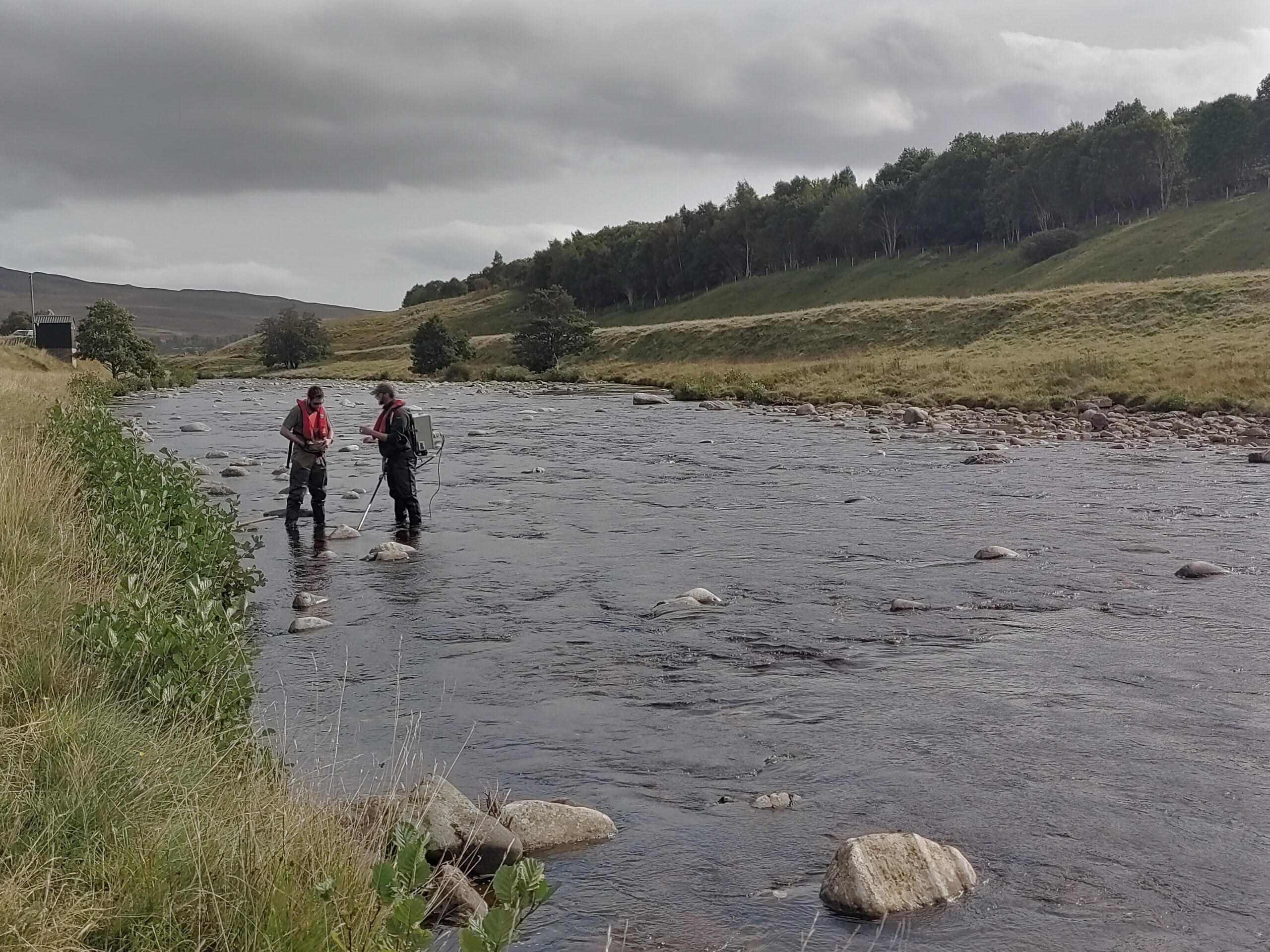
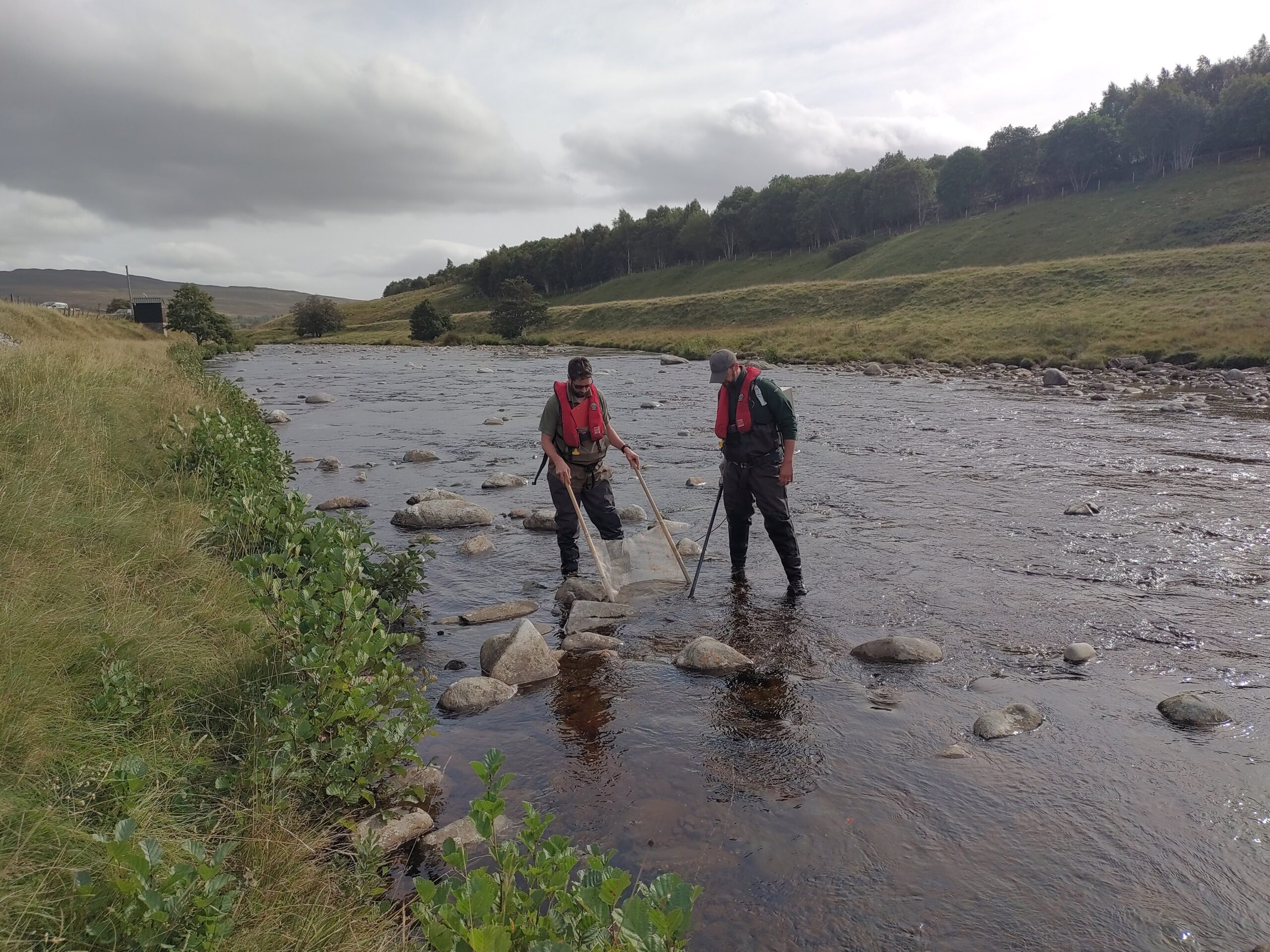
There was no water here 4 years ago!
The River Garry had been dry for over 60 years because of hydro abstraction. As a result of a collaborative project between SSE, SEPA and the Tay District Salmon Fisheries Board the flow was restored on 30th October 2017. Water levels are now controlled and stocking from the Summerhill Hatchery has increased.
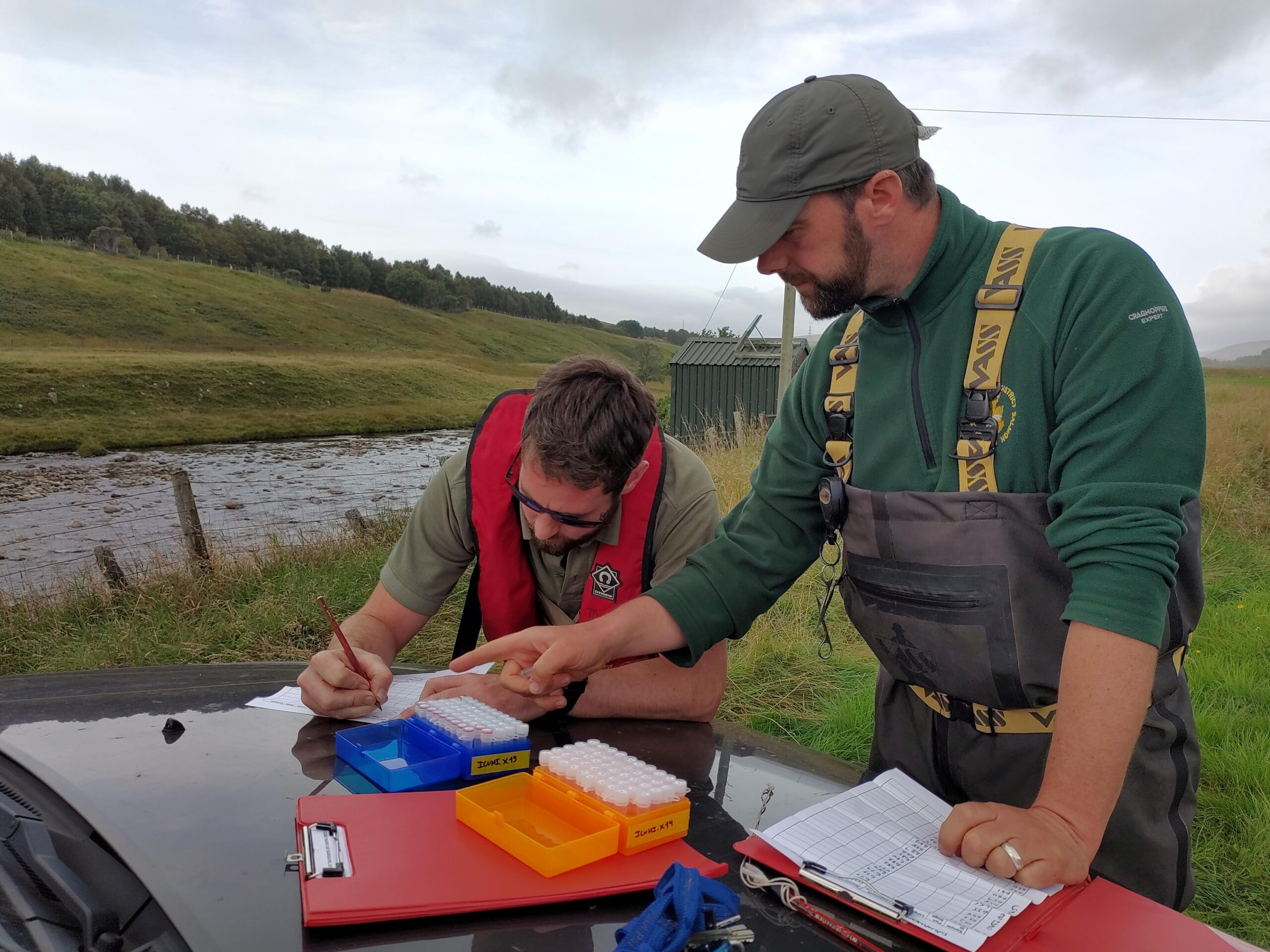
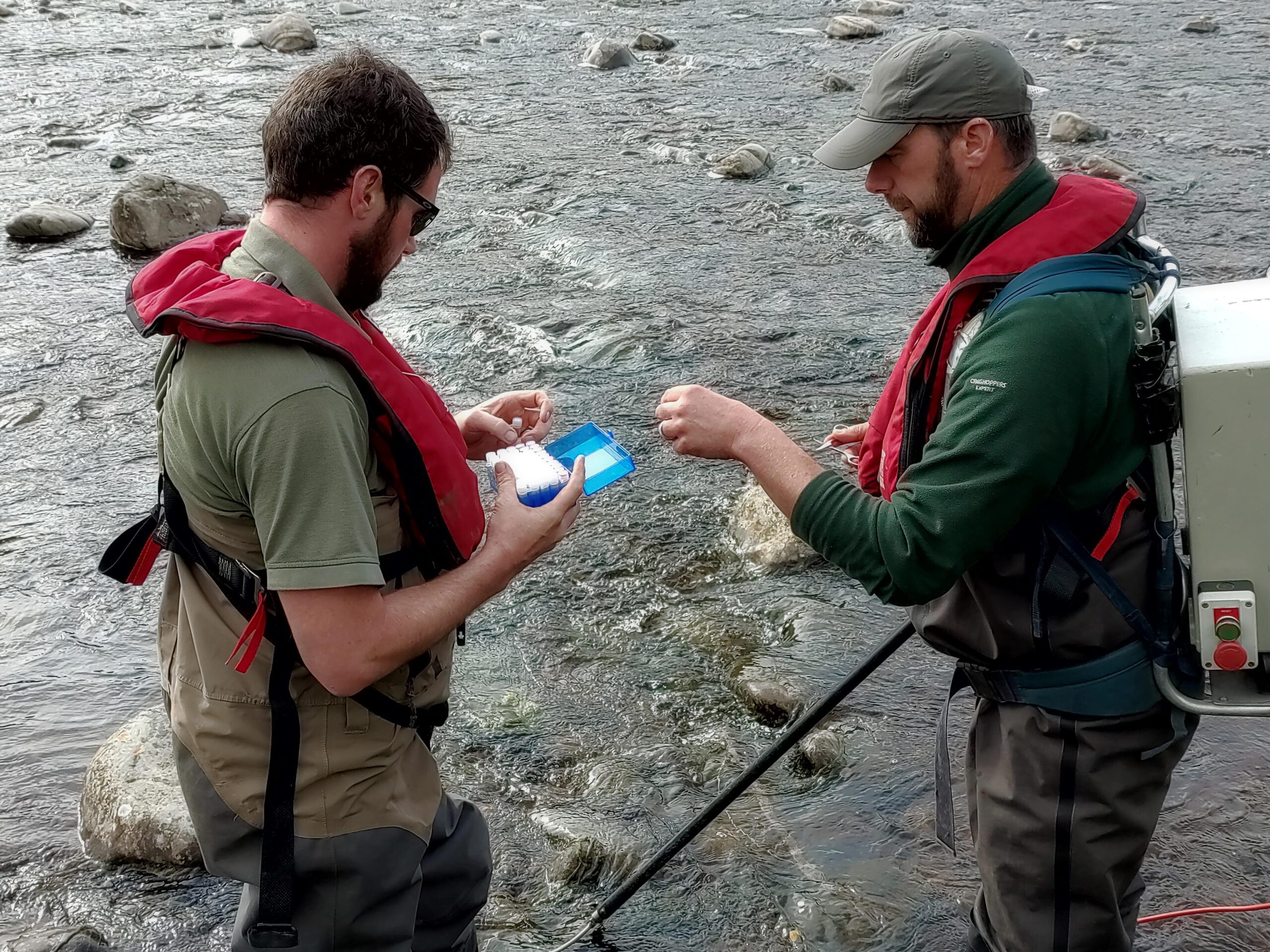
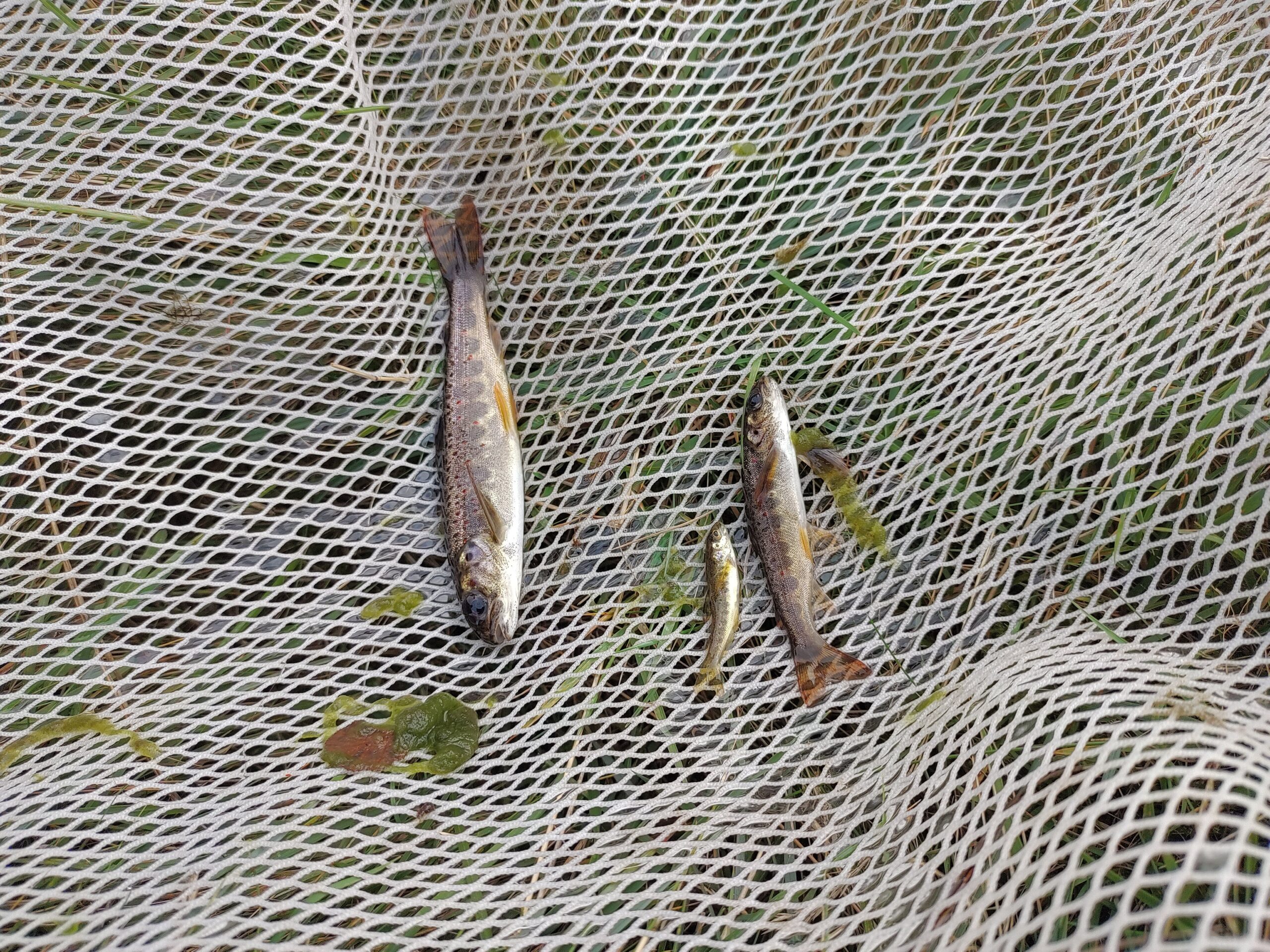
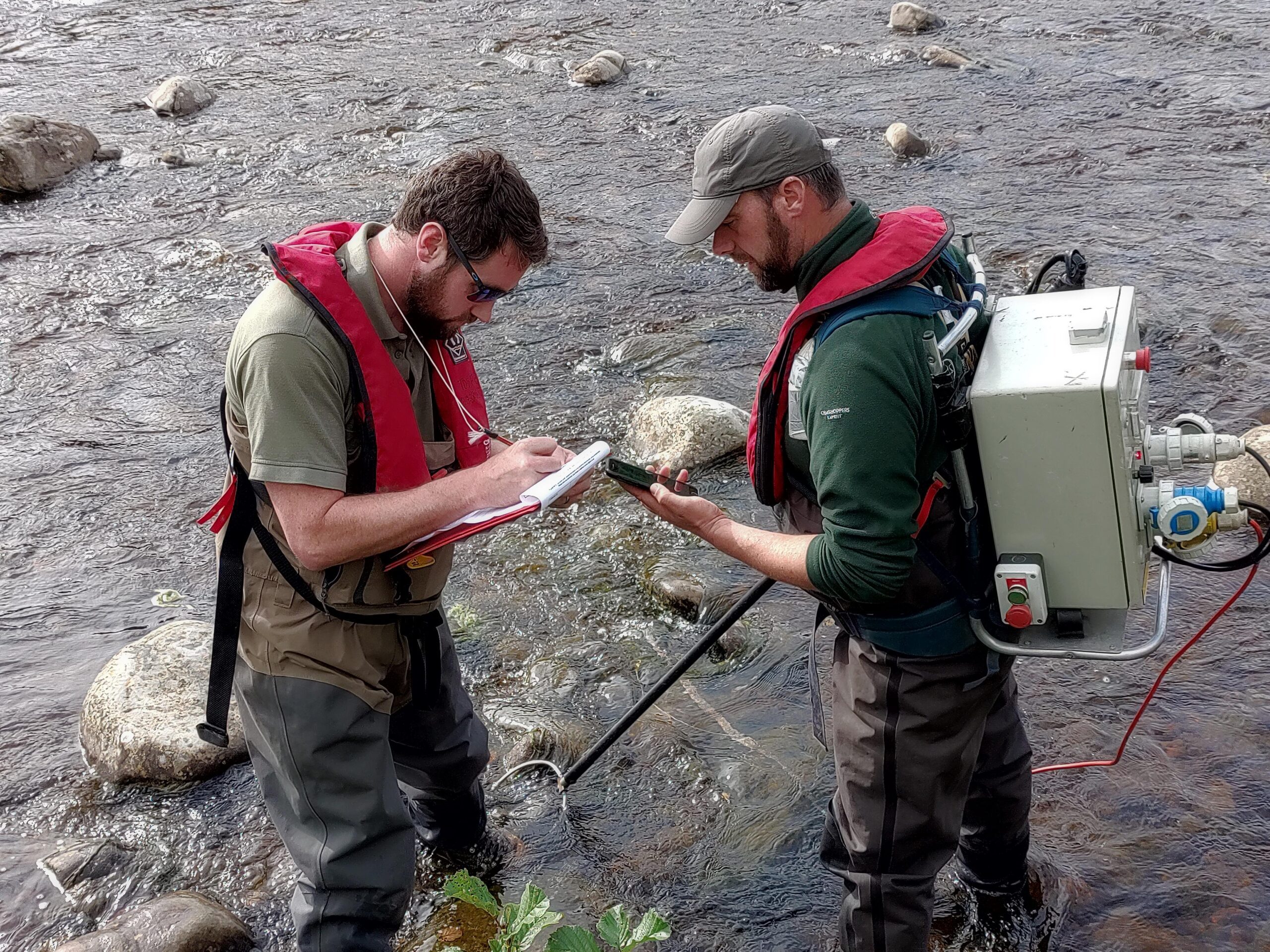
Every year biologists walk the length of the Garry electrofishing in search of salmon fry and one year old salmon parr. They take a tiny piece of the tail which is sent away to the UHI laboratory in Inverness where the DNA is matched with samples taken from broodstock fish in the Summerhill hatchery.
Biologists can see if if the fish are from the hatchery or wild. They can also assign juveniles to families. For example, preliminary results indicate a number of wild fry were found to have had one common parent – presumably their mother – but with 14 different fathers! We presume that because there were so few adults present, a lone female maybe spawned with multiple male parr.
We have been able to show that parr in one year in the main river were of the same family as fry the previous year, a few miles upstream in a tributary. We always imagined that juveniles disperse like this but because they are too small to tag, this actually proves it.
Over time we can measure the colonisation of wild fish, how the juvenile density changes throughout the catchment. Genetic typing can tell us lots of things we could never demonstrate before.
As a result of this project which commenced in 2018 there is now a healthy population of juveniles in this part of the river.
Dr David Summers
Further reading
30 October 2017, a flow was restored to the main stem of the River Garry which had been dry for over 60 years because of hydro abstraction. As a blocking weir at Struan had been removed some months earlier salmon could now access again 13 km of main stem habitat long denied. Weeks later a flow was also restored to the Allt Glas Coire giving salmon access to 5km of tributary too. The new licence conditions require SSE to maintain a flow of 1 cumec at Dalnamein and 0.2 cumecs in the Allt Anndeir, the tributary joing the Garry below Dalnamein. While this is an adequate flow for juvenile salmon, it needs to be proven to be sufficient for adult migration and spawning.
An adaptive management monitoring plan has been developed by SEPA, SSE and the Board to learn how the ecology, including salmon, responds to the restored flow. Included within this plan, the Board will continue for a time to stock parts of the Garry with eggs from reconditioned kelts of local origin in order to ensure that there will be a return of adult fish to test out their ability to pass waterfalls at Struan etc under the flows available. The ultimate aim, of course, is a self-sustaining population.
Benefit to salmon from the River Garry
In addition to the 13km of new main river and 5km of the Glas Coire that is now available to salmon another 4km of habitat above the Glas Coire intake, which has been screened, is being stocked with salmon. The extra cumec of water in the Garry during dry weather means that the wetted area in the 6.5 km stretch of the Garry between Struan and Blair Atholl will also be greater, allowing more juvenile salmon to be produced in this area too. The board considers that if all this habitat is used by salmon then another 1500 salmon, early running salmon, could be produced. The restoration of the River Garry is the biggest individual project for the benefit of spring salmon that could be performed in the Tay catchment. The Board is very pleased the Garry has now been restored after years of discussion and wishes to thank SSE and SEPA for this great work that has been done.